The gap after "won"
After a deal closes, follow-ups split three ways:- Delivery tasks go to the project tool. That's fine.
- Relationship follow-ups (check-ins, approvals, promises) go somewhere. Usually email.
- Commercial follow-ups (renewals, upsells, invoices) live in someone's head.
Keep one record from lead to client
Don't create a new record when someone becomes a client. Keep the same one and change the status:Lead, contacted, proposal sent, won and active, past client.That way the notes from the sales calls ("cares most about launch date," "finance signs off on anything over 10k") are still on the record when you need them six months later.
The first two weeks
Right after "won," set these next actions:WhenNext action
Day 0Send welcome and kickoff invite
Day 1Request access, files and contacts
Day 3Check that access and files arrived (waiting)
KickoffRecap email with decisions and promises
Day 14First check-in: anything unclear so far?
The sales-to-delivery handoff
In agencies where the person who sold the project isn't the person running it, the handoff is where client context gets lost. The client then repeats themselves in kickoff, and feels like they're starting over with a stranger. A short handoff note fixes most of it. Answer these seven questions before kickoff:- Why did they buy? The real reason, in their words, not the scope.
- What did we promise that isn't in the contract? Timelines, "we'll also help with...", favours.
- Who decides, and who just has opinions?
- What are they worried about? The objection that almost stopped the deal.
- How do they like to communicate? Email, calls, weekly or only when needed.
- What does success look like to them in three months?
- What's the first thing they'll judge us on? Often it's speed of the first deliverable, not quality.
During the project
Delivery runs in the project tool. Alongside it, keep these on the client record:- Approvals you're waiting on, with check dates. See how to track client approvals.
- Promises made on calls, by you and by them.
- Regular check-ins, even when the project is going well.
After the project
This is where many agencies lose easy work:- Wrap-up: send a summary of what was delivered and what's next.
- Check-in at 30 days: how is it working? Anything to fix?
- Renewal or next phase: set a date well before the retainer or contract ends.
- Past client: a light check-in every few months. Past clients are often a good source of new work and referrals.
A renewal timeline for retainers
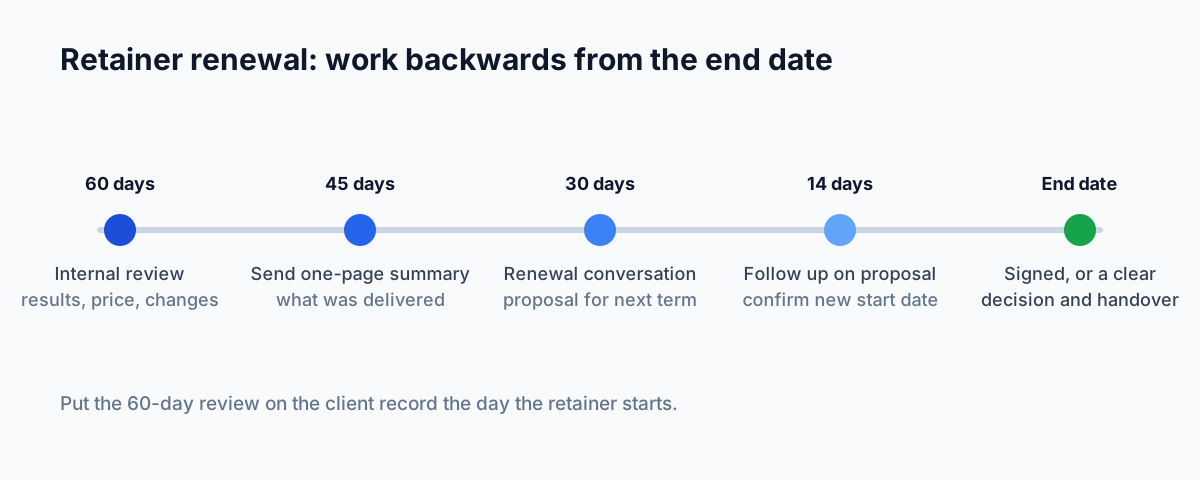
Renewals are rarely lost at the renewal meeting. They're lost in the months before, when nobody showed the client what they got. Work backwards from the end date:WhenNext action
60 days beforeInternal review: results so far, what we'd change, is the price still right?
45 days beforeSend the client a one-page summary of what was delivered and what moved
30 days beforeRenewal conversation, with a proposal for the next term
14 days beforeFollow up on the proposal; confirm start date of the new term
End dateSigned, or a clear decision and a handover plan
Leads and clients in one list
When leads and clients live in different tools, your morning looks like this: check the CRM for leads, check email for clients, check the project tool for blockers. Put all of them in one daily list, sorted by next action date, and the morning becomes one pass. The approach is in how to know which client to contact today.Common questions
Should onboarding tasks go in the project tool?
Delivery onboarding (setting up the repo, creating the board) yes. Relationship steps (welcome, access request, first check-in) are better on the client record, so they stay visible after the project is set up.How often should I check in with active clients?
Many agencies settle on every two to four weeks on top of normal project communication. Pick a rhythm and put the date on the record.What about retainer clients?
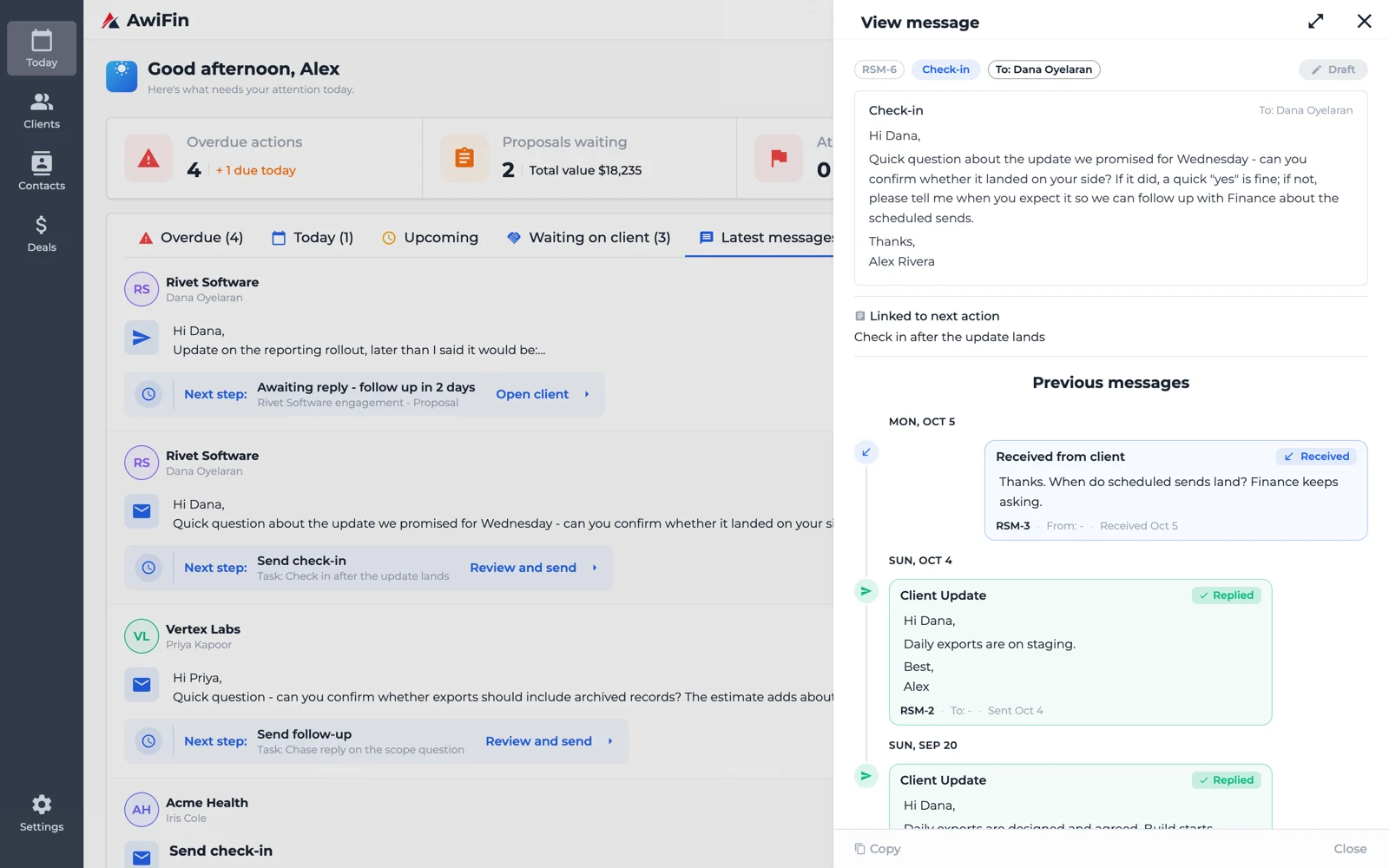
Retainers need a renewal date and a regular check-in more than anything. Put the renewal follow-up at least a month before the end date.One record from lead to renewal in AwiFin
Sources
- A. Gallo, The Value of Keeping the Right Customers, Harvard Business Review, October 2014, citing research by Frederick Reichheld of Bain & Company.