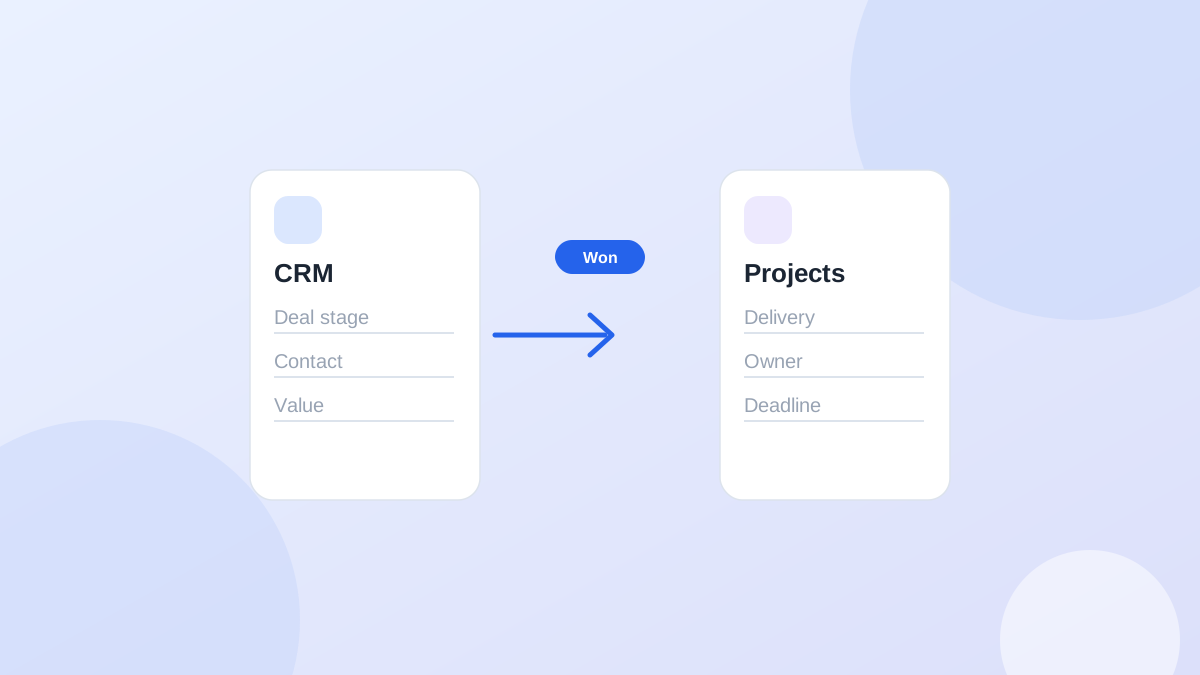
What each tool is designed for
A CRM is built around relationships and commercial opportunities. It answers: who is this person, what company are they at, what is the deal worth, what stage is it in, when did we last talk?Project management software is built around work. It answers: what needs to be delivered, who owns it, when is it due, what is blocked, what is done?Both are useful. Neither answers well: what does this client need from me next?Where things belong
ItemBest home
Implement checkout flowProject management
Deal worth $15,000CRM
Ask client to approve checkout flowClient next action
Contract renewal dateCRM
Send Friday progress updateClient next action
Bug: mobile menu overlaps logoProject management
Follow up on missing product imagesClient next action
Pipeline stage: proposal sentCRM
Example: a website agency
Take an active website project. Your project system probably contains design homepage, implement checkout, configure analytics and test mobile layout. That's delivery.Around the same project you also have: send Friday progress update, ask the client to approve the homepage, follow up on missing product images, answer a budget question and schedule a stakeholder review. That's relationship work.You can put both in one board, but small relationship actions then compete with large production tasks, and they're the ones that get postponed.The CRM has the opposite problem
You move the deal from "proposal sent" to "won." Great. But the relationship carries on, and now you need to track promises, approvals, updates, requests, check-ins and eventually renewals. For service businesses, the relationship doesn't end at the close. That is when most of the important follow-through begins.Why agencies lose the third category
Most stacks cover delivery well (Jira, Asana, ClickUp, Monday, Trello) and sales well (HubSpot, Pipedrive, Folk and others). Client next actions tend to live in email, calendar reminders, Slack, notes and memory.That's why an agency can have an excellent CRM and an excellent project tool and still forget to follow up. It isn't always a configuration problem. Sometimes it's a missing workflow.Do you need another tool?
Not automatically. If your current setup reliably tells you, each morning:- who needs a reply,
- what you are waiting for,
- what you promised,
- which follow-ups are overdue,
Three signs you're missing that layer
- You check the inbox, the CRM and the board every morning just to decide who to contact.
- Approvals and promises come up in meetings because nobody chased them.
- A prospect becomes a client and the context from the sales conversation doesn't come with them.
One record from lead to client
A related problem: the prospect lives in the sales system, wins, then their information moves somewhere else. The relationship didn't reset. The proposal discussion, the promises made during discovery and the person's communication style still matter. Keeping that context together makes client management noticeably easier.Think in layers, not replacements
A practical agency stack can be:- CRM: contacts, deals and pipeline
- Project management: delivery
- Email: conversations
- Client next-action layer: the open loops between you and the client